Going into IVF? Here's What's Worth Doing First
You've decided to do IVF. Maybe this is your first cycle. Maybe it isn't. Either way, you want to give it the best possible chance, and that instinct is exactly right.
This is not a post about whether IVF is the right choice. It is a brilliant tool, and for many people it is the path that works. What I want to talk about is what happens before the stimulation cycle: the window that most people don't know exists, and that most standard care doesn't use.
Because IVF doesn't create your egg quality. It doesn't improve your sperm DNA. It works with what you bring to it. And that matters more than most people realise until they're already in the process.
"IVF doesn't create your egg quality. It works with what you bring to it."
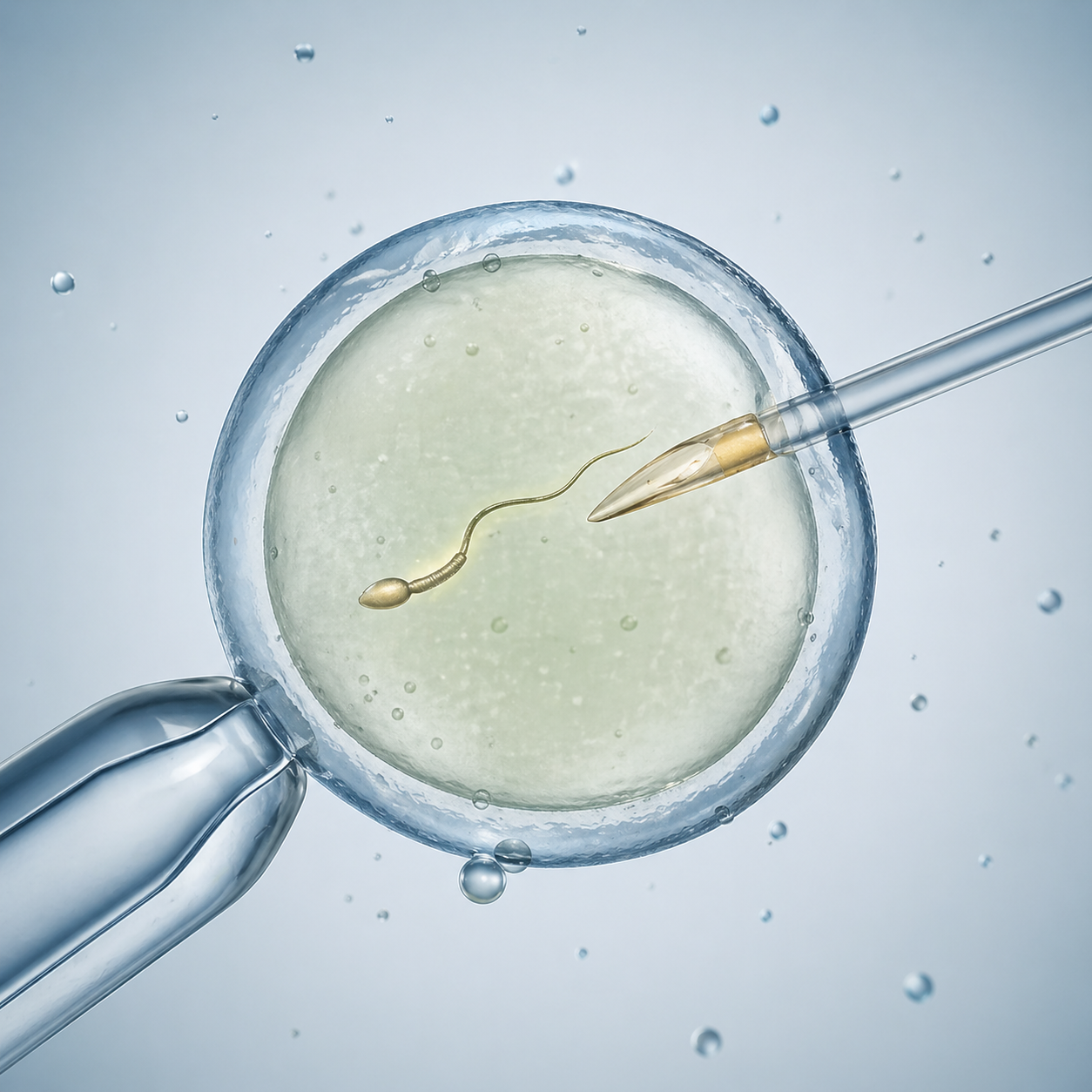
What IVF Does, and What It Can't
IVF is, at its core, a retrieval and fertilisation tool. It bypasses some of the steps that can be difficult to achieve naturally: getting the egg and sperm together, early embryo development outside the body, transferring at the right moment. For people with blocked tubes, severe sperm factor, or endometriosis affecting conception, it removes enormous barriers.
What it cannot do is change the underlying quality of the gametes it's working with.
If an egg has DNA damage, IVF cannot fix that. If sperm fragmentation is high, IVF cannot correct it. If your thyroid is slightly off, your uterine lining is compromised, or your nutritional status is depleted going into the cycle. The process is working with a diminished starting point.
This isn't a criticism of IVF. It's a description of what it is. And once you understand it that way, the question becomes: what can you do to improve the raw materials before you start?
The Standard Pre-IVF Workup: What's Usually Covered
When you begin the IVF process with a clinic, you'll typically have:
AMH (anti-Müllerian hormone), an indicator of ovarian reserve
Antral follicle count via ultrasound
Basic hormonal panel (FSH, LH, oestradiol)
Basic semen analysis: count, motility, morphology
Uterine assessment
This is a solid foundation. It tells the clinic what they need to know to design your protocol. It is not, however, a comprehensive picture of everything that might affect whether that cycle succeeds.
What's Often Not Included, and Why It Can Matter
Here is where a thorough preconception assessment goes further than a standard clinic workup.
Sperm DNA fragmentation. A standard semen analysis checks count, movement, and shape. It does not check whether the DNA inside those sperm is intact. Fragmented sperm DNA can lead to failed fertilisation, poor embryo quality, or early pregnancy loss, even when the standard semen analysis looks completely normal. This test is not routinely ordered. It should be.
Full thyroid panel. Most standard panels check TSH alone. A thorough panel includes free T3, free T4, and thyroid antibodies. Subclinical thyroid dysfunction (the kind that sits just outside "normal" range or involves antibody elevation without obvious symptoms) is significantly associated with implantation failure and early miscarriage. It is also eminently addressable when it's caught.
Methylation and nutrigenomic assessment. If you have heard of MTHFR, this is where it becomes clinically relevant. Methylation is the biochemical process your body uses to convert folate into the active form that supports healthy cell division, DNA repair, and egg and sperm development. If that pathway is compromised, through genetic variants, nutritional depletion, or both, you are bringing compromised raw materials to the IVF process. Standard folate supplementation does not always address this. Knowing your methylation status lets you correct it before stimulation begins.
Vaginal microbiome. This is newer, and it matters. Emerging research shows that the composition of the vaginal microbiome affects endometrial receptivity and IVF implantation outcomes. A microbiome dominated by Lactobacillus is associated with significantly higher implantation rates. Dysbiosis, even without symptoms, may be quietly affecting your results. This can be tested and corrected.
Nutritional status markers. Vitamin D, B12, iron studies, zinc, CoQ10: these are not luxury extras. They are the building blocks of cellular function during the most cell-sensitive process in the body. Going into a stimulation cycle nutritionally depleted is like trying to build a house with half the materials. A pre-IVF assessment should look at where you actually are, not assume you're fine.
The Three-Month Window: Why It Exists
Egg development takes approximately 90 days from primordial follicle to mature egg. Sperm takes approximately 72 days to fully develop.
This means what is happening in your body right now is directly affecting the quality of the gametes you'll be using three months from now.
This is the preconception window. It is not an arbitrary waiting period. It is the biological timeframe within which nutrition, lifestyle, stress, sleep, thyroid function, and targeted supplementation can meaningfully influence the quality of what you bring to your IVF cycle.
If you're already going through everything IVF involves: the injections, the monitoring appointments, the emotional weight of every scan, the financial cost. Why wouldn't you spend three months first making sure you're working with the best possible starting point?
It's not about being perfect. It's about knowing where you're starting from, and addressing what's addressable before you begin.
Half of the Equation Involves Him
This is something I come back to constantly, because it gets overlooked constantly: half of the fertility equation involves him.
Sperm quality is not checked thoroughly in most pre-IVF workups. And yet sperm contributes half the genetic material to every embryo. Sperm DNA fragmentation, oxidative stress, nutritional status, and lifestyle factors all affect embryo quality, and all of them are modifiable within that 72-day window.
I have seen couples go through multiple IVF cycles focused almost entirely on her, with his contribution assessed by a basic semen analysis and nothing more. When we properly prepare the male partner (DNA fragmentation testing, antioxidant support, addressing heat exposure, alcohol, and targeted supplementation) the picture often changes.
If you're going into IVF as a couple, prepare as a couple. His starting point matters just as much as hers.
Egg Freezing: The Quality of What You Freeze Matters
If you're freezing eggs rather than proceeding straight to transfer, the same principles apply, arguably more so, because what you freeze today is what you'll be working with later.
Freezing is a snapshot. The eggs that go into the freezer are the eggs that come out. There is no improving them once they're stored. So the question before any egg freezing cycle isn't just how many can we retrieve. It's: what is the quality of what we're banking?
Three months of targeted preparation (corrected deficiencies, supported methylation, reduced oxidative stress, optimised nutrition) can meaningfully influence that quality. It's worth doing before you freeze, not after.
You're Already Doing the Brave Thing
Going into IVF takes courage. It takes physical resilience, emotional strength, financial commitment, and an extraordinary amount of hope. You are already doing something hard.
Preparation isn't an additional hurdle. It's the part that helps the hard thing work.
An IVF cycle that starts from a genuinely optimised foundation (both partners properly assessed, nutritional gaps addressed, hormonal function supported, timing thoughtfully managed) is not the same as a cycle that goes straight from decision to stimulation. You deserve the second kind.
Ready to give Your IVF Cycle the Best Possible Start?
IIf you're preparing for IVF — whether your first cycle or your fourth — I'd love to help you build the best possible foundation. A personalised, science-rooted assessment for both partners, so you go in knowing you've done everything that's worth doing.
Start with a Free Discovery Call and learn how a personalised, science-rooted approach can bring clarity and renewed hope.
The information in this article is for educational purposes only and does not constitute medical advice or replace personalised clinical care. Every person's health picture is unique, and what is appropriate for one individual may not be appropriate for another. If you are navigating fertility challenges, pregnancy loss, or any other health concern, please seek guidance from a qualified health practitioner who can assess your individual circumstances. For individualised assessment and treatment, please consult a qualified health practitioner.