Your Vaginal Microbiome and Fertility: What the Research Actually Shows
There is a part of your fertility picture that most clinics do not look at. It does not show up on a standard blood panel. It is not covered in the usual fertility workup. And yet the research on it is some of the most compelling in reproductive medicine right now.
It is your vaginal microbiome. And it has a direct, measurable effect on your ability to conceive, implant an embryo, and carry a pregnancy.
If you have been navigating fertility challenges and the microbiome has not come up in your care, you are not alone. It is not yet routine. But the evidence is clear enough that I consider it a core part of investigating anyone who is struggling to conceive or experiencing recurrent loss.
What the Vaginal Microbiome Actually Is
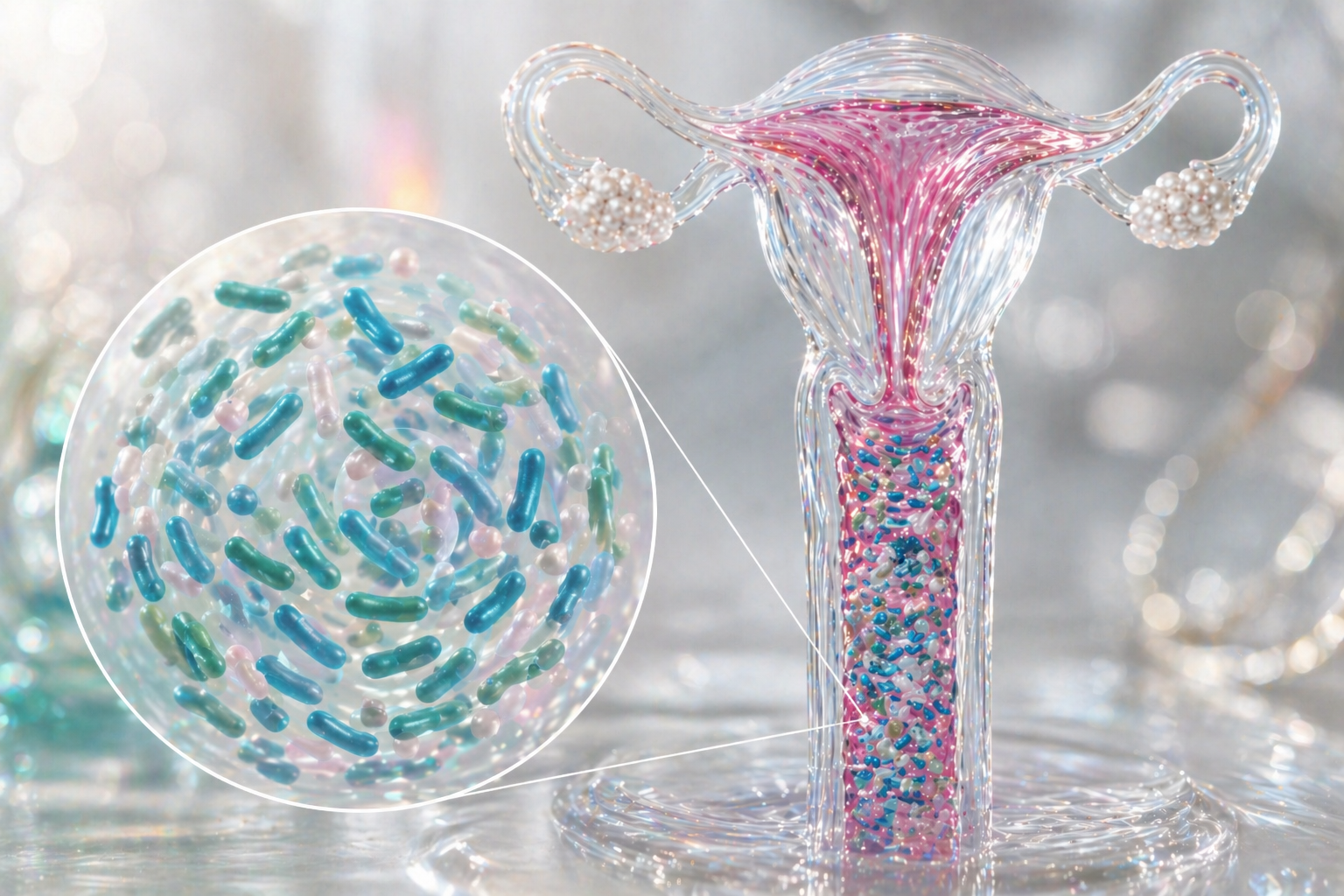
Your vagina is home to a community of microorganisms, mostly bacteria, that live in a dynamic ecosystem. Unlike most other microbiomes in the body, which thrive on diversity, a healthy vaginal microbiome is characterised by low diversity and dominance of a single genus: Lactobacillus.
Lactobacillus species, particularly Lactobacillus crispatus, produce lactic acid, which keeps the vaginal pH low and acidic. This environment is protective. It discourages the overgrowth of harmful bacteria, supports the health of the vaginal epithelium, and creates conditions that are favourable for sperm survival and early embryo development.
When this balance is disrupted and other bacterial species begin to take over, the environment shifts. pH rises. Inflammation increases. And the reproductive consequences can be significant.
What Dysbiosis Looks Like, and Why It Is So Often Missed
Vaginal dysbiosis means a disruption to the normal microbial balance. The most well-known form is bacterial vaginosis, which occurs when anaerobic bacteria overgrow and displace Lactobacillus. But dysbiosis exists on a spectrum, and many women have a disrupted vaginal microbiome without meeting the clinical criteria for BV, and without any symptoms at all.
Vaginal dysbiosis is frequently asymptomatic. No unusual discharge, no odour, no itch. Nothing to prompt investigation. And yet subclinical dysbiosis has been associated in research with reduced fertility, implantation failure, and recurrent pregnancy loss.
A standard fertility workup does not include vaginal microbiome assessment. A cervical swab looking for obvious infections is not the same thing. Comprehensive microbiome testing, which analyses the full community of organisms present, is the only way to actually see the picture.
Research suggests that women with a Lactobacillus-dominant vaginal microbiome have significantly higher clinical pregnancy rates and lower miscarriage rates compared to women with a disrupted microbiome, including in IVF cycles. This association holds even when other fertility parameters are controlled for.
How the Vaginal Microbiome Affects Conception
The vaginal microbiome is the first environment sperm encounter after entering the reproductive tract. A Lactobacillus-dominant, low-pH environment supports sperm survival and capacitation, the activation process sperm need to undergo before fertilisation is possible. A dysbiotic environment, with elevated pH and increased inflammatory signals, is hostile to sperm and narrows the window of opportunity for fertilisation.
Beyond sperm survival, the vaginal microbiome also influences cervical mucus. Healthy cervical mucus during the fertile window is part of how sperm reach the egg. A disrupted microbiome can alter mucus quality in ways that impede sperm transport before they even reach the uterus.
How the Vaginal Microbiome Affects Implantation
This is where the research gets particularly compelling.
The vaginal microbiome does not stay in the vagina. Microorganisms travel upward through the cervix into the uterus, influencing the endometrial environment where implantation occurs. Studies have found that women with vaginal dysbiosis at the time of embryo transfer have significantly lower implantation rates compared to women with Lactobacillus-dominant microbiomes. This has led to growing calls within reproductive medicine to assess the vaginal microbiome before IVF cycles, though it remains far from standard practice in Australia.
The endometrium, the uterine lining, also has its own microbiome. Disruption there is directly associated with implantation failure and recurrent pregnancy loss. The vaginal and uterine microbiomes are connected, and addressing one without considering the other misses part of the picture.
What Disrupts the Vaginal Microbiome
The vaginal microbiome is sensitive, and the factors that can shift it away from Lactobacillus dominance are well documented in the research. Some of the most significant include:
EVIDENCE-BASED DISRUPTORS
ANTIBIOTIC USE : even short courses for unrelated infections directly deplete Lactobacillus and create conditions in which opportunistic organisms can establish
HORMONAL CONTRACEPTION : oral contraceptives and intrauterine devices have been shown in research to alter microbial balance, with Lactobacillus populations sometimes taking time to re-establish after stopping
NEW OR MULTIPLE SEXUAL PARTNERS : sexual activity can introduce bacterial populations that shift the vaginal environment, and is a well-established risk factor for bacterial vaginosis in the research
A HIGH GLYCAEMIC DIET : Lactobacillus depends on glycogen in the vaginal epithelium as a fuel source; dietary patterns that reduce glycogen availability can directly affect the microbiome
CHRONIC PSYCHOLOGICAL STRESS : shown in multiple epidemiological studies to be associated with elevated cortisol, reduced Lactobacillus populations, and higher rates of bacterial vaginosis
HYGIENE PRODUCTS AND PRACTICES : douching, scented products, and harsh soaps disrupt the protective low-pH environment that Lactobacillus maintains
What Naturopathic Support Looks Like
Restoring and maintaining a healthy vaginal microbiome is genuinely achievable with the right approach. It is one of the most clinically satisfying areas of practice, because the response to targeted intervention can be measurable and relatively prompt.
Assessment always comes first. A standard cervical swab or basic culture is not sufficient to see the full picture. The testing I use employs next-generation sequencing technology, the same approach used in leading reproductive research settings. Unlike standard tests that return a simple positive or negative for a small number of organisms, next-generation sequencing identifies every bacterium and fungus present at detectable levels, along with their relative abundance. It can detect organisms such as Ureaplasma and Mycoplasma that standard pathology routinely misses, and it tells us not just what is present but how dominant it is within the broader community.
That level of detail matters clinically. Two people can carry the same organism and have entirely different pictures depending on what else is present alongside it. Treatment that does not account for the full ecosystem is working without the full picture.
Once we have clarity, support is targeted and individualised. This includes specific probiotic strains with evidence for vaginal colonisation, dietary and lifestyle modifications based on what is driving the dysbiosis, and direct treatment of any pathogens or overgrowths identified. Every plan is built around what the testing actually shows.
As a Certified Intimate Ecologist, the genitourinary microbiome is not a side note in my practice. It is central to how I understand and support reproductive health in every client I work with.
Is This Part of Your Fertility Picture?
If vaginal microbiome assessment has not been part of your fertility investigation, it is worth raising with your practitioner, particularly if you have experienced recurrent pregnancy loss, failed IVF cycles, or unexplained infertility.
Want to know if this is part of your fertility picture?
If you would like to explore whether the vaginal microbiome could be a missing piece in your fertility picture, I would love to talk.
Start with a Free Discovery Call and learn how a personalised, science-rooted approach can bring clarity and renewed hope.
The information in this article is for educational purposes only and does not constitute medical advice or replace personalised clinical care. Every person's health picture is unique, and what is appropriate for one individual may not be appropriate for another. If you are navigating fertility challenges, pregnancy loss, or any other health concern, please seek guidance from a qualified health practitioner who can assess your individual circumstances. For individualised assessment and treatment, please consult a qualified health practitioner.